
How to Transition From Lead-Based to Conversation-Based GTM
- Elizabeth Christopher
- Jun 26
- 5 min read
Most companies that understand the case for conversation-based GTM do not move immediately. They pause. They think about their existing processes, their current team structure, their technology investments, the campaigns already running, the SDR team already hired.
And then they ask the question that sits underneath every strategic shift: how disruptive is this, really?
The honest answer is: less disruptive than staying with a model that is no longer working. But the transition does require three things to change simultaneously, and understanding what those three things are is the difference between a company that modernizes its GTM motion and one that runs AI experiments inside the same broken architecture until the experiments lose funding.

The Mistake Most Companies Make First
Research from Arise GTM (2026) shows that only around 6% of organisations are extracting genuine bottom-line value from AI, despite near-universal adoption. The differentiator is not the tools. It is a clear framework and human judgment applied on top.
The pattern is consistent across industries and company sizes: companies adopt AI tools into their existing GTM architecture without changing the architecture. They automate the nurture sequence. They add AI to the lead scoring model. They install a chatbot on the website that routes to the SDR queue.
The architecture stays intact. The queue stays. The delay stays. The structural problem remains: the system was never designed to engage buyers at the moment of interest.
The tools change. The outcomes do not.
Conversational AI for inbound qualification is the fastest-growing GTM segment in 2026, accelerating from 18% adoption in 2024 to 32% in Q1 2026, according to Digital Applied's analysis. That trajectory signals where the market is heading, not where most companies currently are. The question is whether the companies moving in that direction are deploying it as a genuine architectural replacement or as another layer on top of the same slow system. The answer determines whether they join the 6% extracting real value or the majority who are not.
The Mindset Shift That Makes Everything Else Possible
The transition from lead-based to conversation-based GTM begins with a belief change, not a technology change.
Lead-based GTM is built on the belief that the primary job of marketing is to generate interest and the primary job of sales is to convert it. The two functions operate sequentially. Marketing passes to sales. Sales works the lead. The process has stages, and each stage has a different owner.
Conversation-based GTM is built on a different belief: that the moment of interest and the moment of engagement are the same moment, and that a buyer who is not engaged at the point of interest is a buyer who is already being lost.
In practice, that belief shift looks like this: a marketing team that stops reporting on MQL volume and starts reporting on qualified conversation rate. A sales team that stops receiving leads to chase and starts receiving validated buyers to close. A revenue leader who stops asking "how many leads did we generate this month?" and starts asking "how many real buyers did we have a conversation with?" The metrics change because the belief about what matters has changed.
That shift, from sequential stages to simultaneous response, changes everything that follows. It changes what marketing optimizes for. It changes what sales is responsible for. It changes how technology is evaluated and deployed.
Digital Bloom’s 2026 B2B GTM Benchmarks report that 36% of GTM leaders cite scaling GTM motions and pipeline as their top challenge in 2026. The challenge is not that these leaders lack pipeline ambition. It is that they are trying to scale a motion that has a structural ceiling, and that ceiling will not move by adding more to the top of the funnel. It moves by changing how the funnel responds to the interest it already receives.
What Conversation-Based GTM Actually Requires
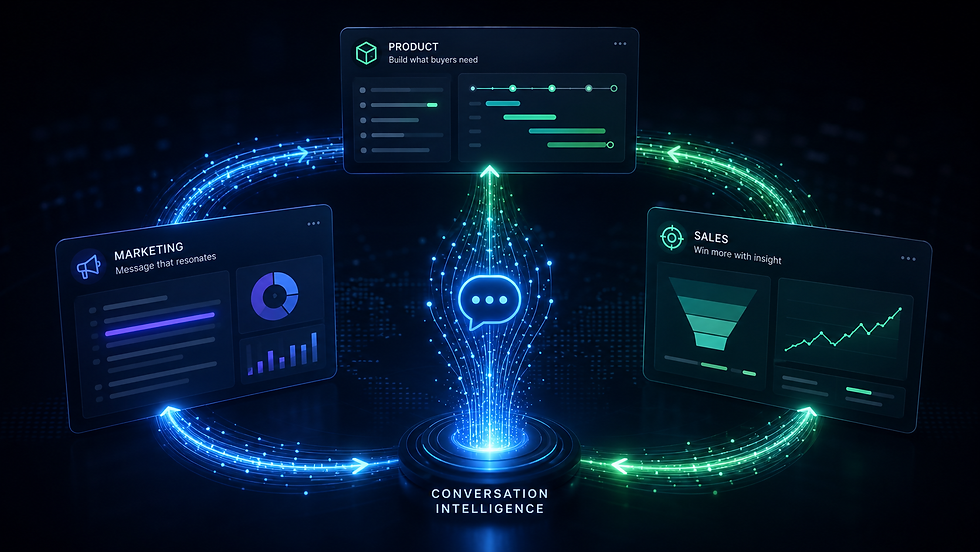
There are three layers to the transition. Each one builds on the previous.
Companies that change technology without changing process simply automate existing bottlenecks. Companies that change process without changing mindset eventually revert to old behaviors. Sustainable transition requires all three layers to move together.
The mindset layer is the belief shift described above. Without it, the process and technology layers will be implemented as additions to the existing model rather than replacements for its most problematic components. Most failed AI GTM implementations fail here, not because the technology did not work but because the organization did not change what it was trying to do.
The process layer is where structural changes happen. Inbound interest stops flowing into queues and starts triggering immediate engagement. The handoff from marketing to sales is no longer a transfer of unqualified leads but a delivery of validated buyers with full conversation context attached. The metric that governs success shifts from MQL volume to qualified conversation rate and buyer-to-conversation conversion. These changes are not minor adjustments. They require deliberate re-examination of what each function in the revenue team is accountable for.
The technology layer enables the process layer to operate at scale. A conversation-based GTM model requires a capability that traditional stacks do not include: an always-on engagement layer that can initiate qualified conversations instantly across every inbound channel without human bottlenecks. Three in four GTM leaders now report top-down pressure to adopt AI, according to Digital Bloom's 2026 research. The pressure is real. The question is whether the AI being adopted is capable of replacing the architecture or only of automating within it.
What Does Not Need to Change
This is the part most transition roadmaps omit, and it is the part that most reduces implementation anxiety.
Human sales reps do not disappear in a conversation-based GTM model. They do different work. They stop doing first-touch engagement, early-stage qualification, and the administrative follow-up that consumes a significant portion of their working week. They start doing what only humans can do: building complex relationships, navigating organizational politics, handling high-stakes objections, and closing deals that require judgment, empathy, and strategic insight.
Marketing does not stop generating demand. It starts measuring demand differently, by the quality of conversations initiated rather than the volume of leads generated.
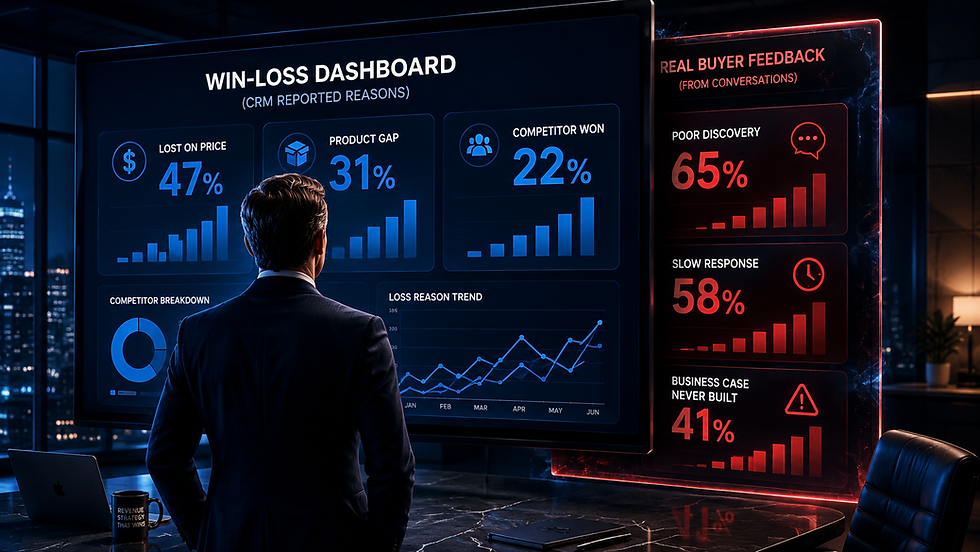
And the CRM does not become irrelevant. It becomes more accurate, because the intelligence entering it comes from real conversations rather than rep-reported loss reasons. The record gets better. The strategy built on it gets better.
The transition is not a demolition. It is a reorientation of incentives, of metrics, and of where in the buyer journey human energy is concentrated.
The Starting Point Is Simpler Than You Think
The transition does not require all three layers to change overnight, but it does require all three to be moving in the same direction. Companies that get this right do not flip a switch. They shift the first inbound touchpoint, see the outcome change, and build from there.
Xynexi was built for exactly this transition. Its Human AI provides the always-on engagement layer that conversation-based GTM requires, engaging every inbound signal instantly across email, SMS, social media, ad campaigns, and your website, while simultaneously capturing the buyer intelligence that powers marketing, product, and sales decisions.
The transition does not require replacing your team, rebuilding your CRM, or dismantling campaigns that are working. It requires changing what happens the moment a buyer expresses interest.
Where does your GTM motion lose the most buyers today, and what would it look like if that moment became an instant conversation?
See how Xynexi powers the transition to conversation-based GTM.
The transition roadmap is clear. The next question is more specific: within an existing sales process, where does the shift actually begin? What changes first, what changes second, and how do you prioritize without disrupting everything at once?

Comments